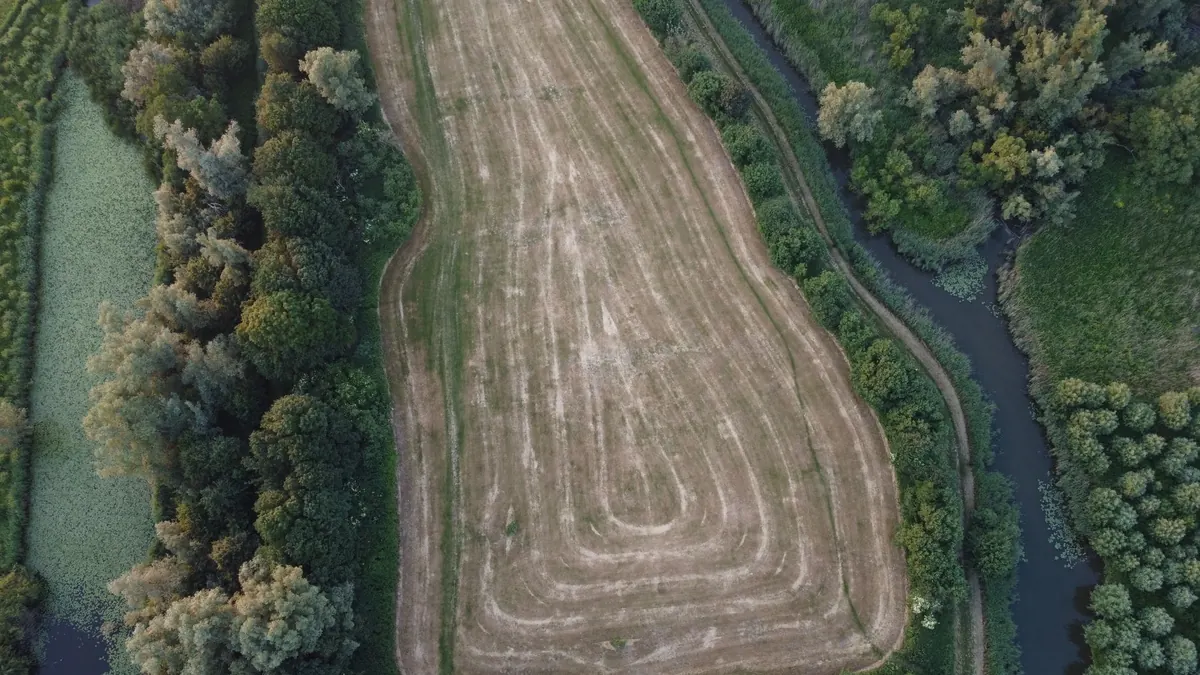
Most wildflower meadow projects fail for the same reason: the grass wins. Rye, cocksfoot, Yorkshire fog and timothy grow faster, root deeper and shade out everything beneath them. You can mow, graze and scarify for years and still end up with a green field and a handful of ox-eye daisies. Yellow rattle changes that arithmetic, and it does so by cheating.
What yellow rattle actually does
Yellow rattle (Rhinanthus minor) is a hemiparasite — half parasite, half self-sufficient plant. Its green leaves photosynthesise like any other wildflower, but its roots also creep through the soil searching for the roots of grasses. When it finds one, it fuses to it and draws out water and nutrients. The grass is not killed. It is quietly weakened, and that is exactly what a meadow needs.
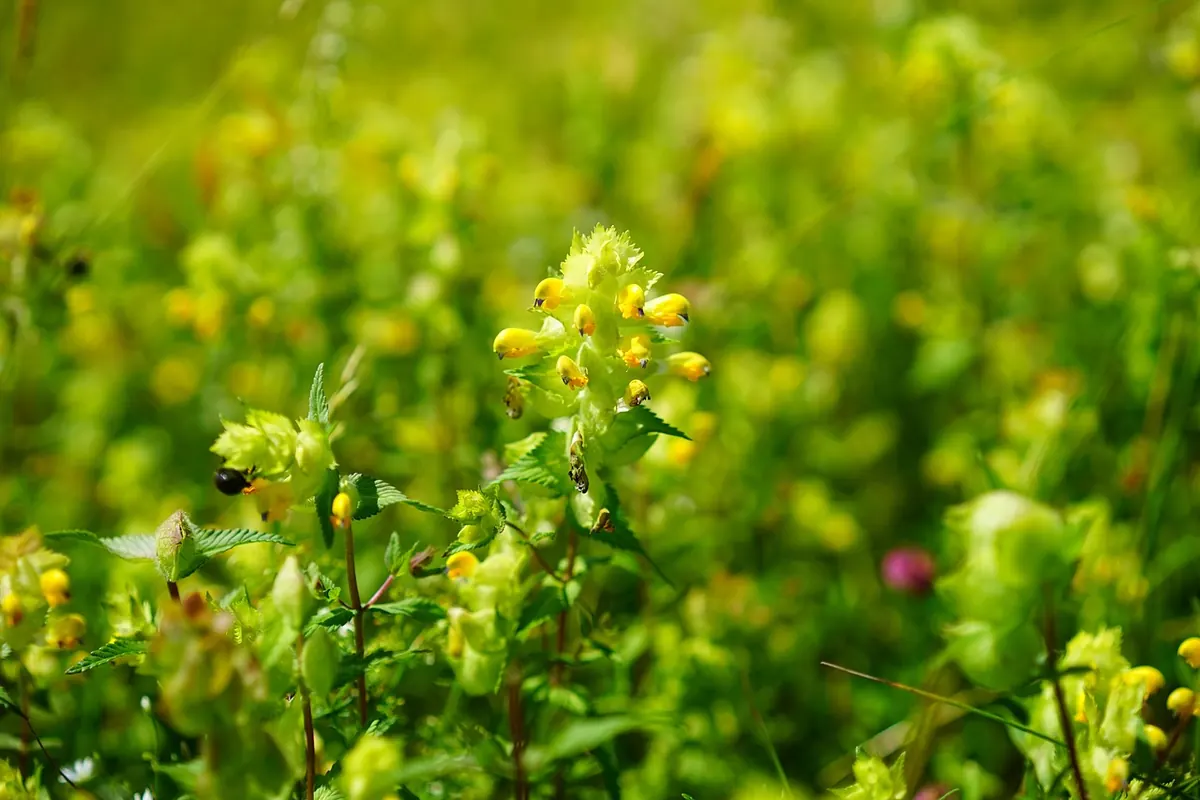
Look for it from May to July: a low plant with a square stem, yellow two-lipped flowers and bracts edged with dark, jagged teeth. By mid-summer the flowers have gone over and the seeds rattle inside their dry capsules, which is where the name comes from.
The effect on a grass-dominated sward is visible within a season. Treated grasses grow shorter and thinner, light reaches the soil, and gaps open up where wildflower seed can germinate. Yellow rattle is often called the meadow maker, and the nickname is deserved — it does the groundwork that sowing alone cannot.
From grass to flowers: why diversity improves
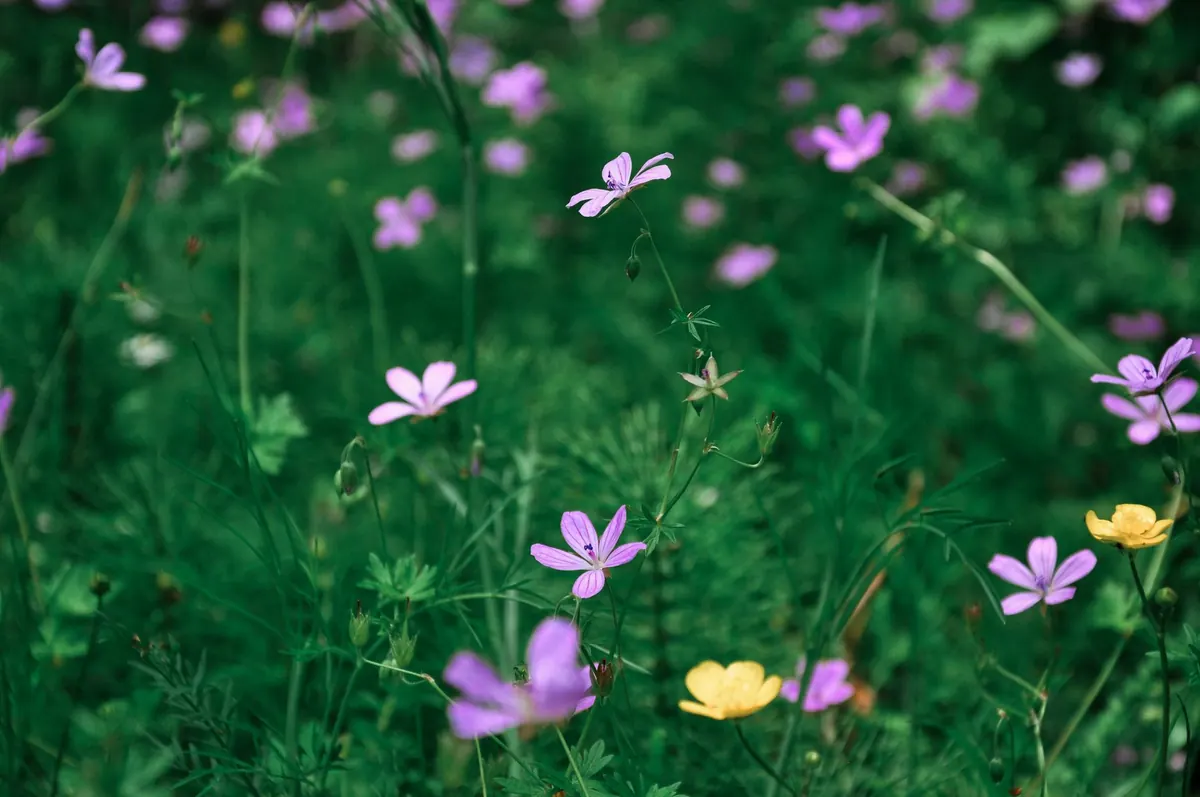
Once the grasses lose their grip, plants that were hanging on in the margins begin to spread: knapweed, birds-foot trefoil, selfheal, meadow buttercup, common sorrel, orchids in the right places. Small, low-growing species in particular benefit, because they are the ones that lose the battle for light in a tall sward.
Yellow rattle is also worth having for its own sake. Bumblebees visit it for pollen, and it flowers in the gap between the first flush of spring flowers and high summer, when there is often little else on offer.
There is a limit to what it can do. On rich, heavily fertilised ground the grasses have so much vigour that a light parasitic load barely registers. If your site has had years of muck or artificial fertiliser, plan a season or two of taking a hay crop and removing it before you invest in seed.
Before you sow: is your site ready?
Yellow rattle is fussy about two things, and both are easy to get wrong.
- It needs grasses nearby. A seedling has to find a host root within a short distance, or it dies. Sowing onto bare soil, into a flower bed, or into a wildflower mix with no grass in it simply will not work.
- It needs light and open ground. Seed germinates best where the sward has been cut hard, scarified or raked to expose patches of soil. Thick thatch and long grass are fatal.
- It needs low fertility. No fertiliser, no compost, no mushroom compost "to help it along".
How to introduce yellow rattle
- Sow in autumn if you can. Late August to October is the natural window: seed drops from the parent plants, sits through the winter cold and germinates in the spring. A mild spring sowing often fails, though February or March can work on a site that stays damp.
- Buy seed from the current year's harvest. Yellow rattle seed is short-lived. Germination falls away sharply after a year or two in a packet, so always ask when the seed was collected and sow it as soon as you reasonably can.
- Open up the sward first. Mow as short as your mower will go, then rake hard or run a scarifier over the area. Aim to create a patchwork of bare soil and thin grass rather than a uniformly stripped surface. Remove the rakings.
- Scatter thinly and evenly. Roughly a gram to a square metre is a sensible starting rate. Mix the seed with dry sand or fine compost so you can see where it lands, and broadcast it in two passes at right angles.
- Firm it in. Lightly rake, then tread or roll the ground so the seed sits in contact with soil. Seed left resting on top of thatch will not establish.
- Keep the grass short through the first spring. A light graze or a gentle cut with the mower on a high setting helps seedlings get established without smothering them.
Managing a meadow once it is growing
The single most common way to lose yellow rattle is to cut too early. It is an annual, so every plant in the meadow has to set seed each year for the population to continue. Cut in June and you will have none left by the following summer.
Check the seed heads before you take the hay cut. Shake one between your fingers — when you hear the rattle, the seed is ripe. That is usually late July into August. Cut to about 5–10cm, leave the hay lying for a day or two so any remaining seed can drop, then clear it away. Removing the cuttings is what keeps fertility down and the sward open, so resist the temptation to leave it as mulch.
A few management habits that help
- Rake or scarify lightly each autumn if thatch is building up. Yellow rattle seed needs bare ground to germinate.
- Keep grazing light and late. Heavy winter grazing on wet ground poisons the soil structure; a gentle autumn graze is fine.
- Expect the balance to shift. As the grasses weaken, yellow rattle often thins out on its own and settles into a smaller, steadier population. That is a sign the meadow is working, not a sign of failure.
- Never feed the meadow. Fertility is the enemy of diversity.
- Be patient. Autumn-sown seed usually flowers the following summer, but a decent show of wildflowers takes three or four seasons.
Start with a small patch
You do not need to convert a whole field. Pick a sunny strip a few metres across, mark it out, and give it the full treatment: hard cut, scarify, fresh seed, tread in, then leave it alone to set seed the following summer. Keep a note of what you sowed and when you cut, because meadow management is mostly a matter of reading the site and adjusting year on year.
If the yellow rattle takes and the grass begins to loosen its grip, you will know within two summers. That first patch becomes your seed source for the rest of the meadow — and a far cheaper way to spread it than buying in more each year.
Photo: Hans / Pixabay