Walk into a good wildflower meadow in July and the noise tells you everything. Bumblebees working the knapweed, a ringlet fluttering low over the grass, the dry rattle of seed heads in the wind. That richness is not an accident. It comes from choosing the right plants and managing the ground so they can flower, set seed and come back stronger next year.
This is a guide to the British natives that genuinely earn their place in a pollinator meadow, and how to fit them together so something is in flower from March to November.
Why natives do the heavy lifting
Our wildflowers and our insects have been evolving alongside each other for thousands of years. Single-flowered natives hold their nectar and pollen where bees and butterflies can actually reach it, and many butterflies need specific native plants to raise their caterpillars. Showy garden cultivars, especially double flowers, often offer nothing at all. If wildlife is the point of your meadow, start with natives, and buy seed of British origin where you can.
Spring: the first lifelines
Queen bumblebees emerge from hibernation in March, often before much else is about. Whatever flowers early in your meadow is doing more work than anything that blooms in July.
Cowslips are the classic choice, with primroses close behind. Lesser celandine, bugle and ground ivy fill gaps in damper, shadier corners, while dandelions — yes, dandelions — are one of the best early pollen sources going. Leave a patch uncut in spring and you will see bees on them within minutes. Red and white dead-nettle bridge the gap into April, and both are worth tolerating at the edge of a bed.
For butterflies, add cuckooflower to any damp ground. Orange-tip females lay on it, and the pale lilac flowers appear just as the adults are on the wing. Sweet violet suits fritillaries in the right area, though it prefers dappled shade and a little neglect.
Early summer: the meadow at full throttle
Late May to early July is the payoff. Ox-eye daisy gives the meadow its white haze, but it is the legumes and knapweeds underneath that feed the most insects.
- Red clover — loved by long-tongued bumblebees such as the garden and common carder bee.
- Bird's-foot trefoil — nectar for bees and the caterpillar food plant of the common blue.
- Kidney vetch — essential for small blue where it occurs, and good on chalky, thin soils.
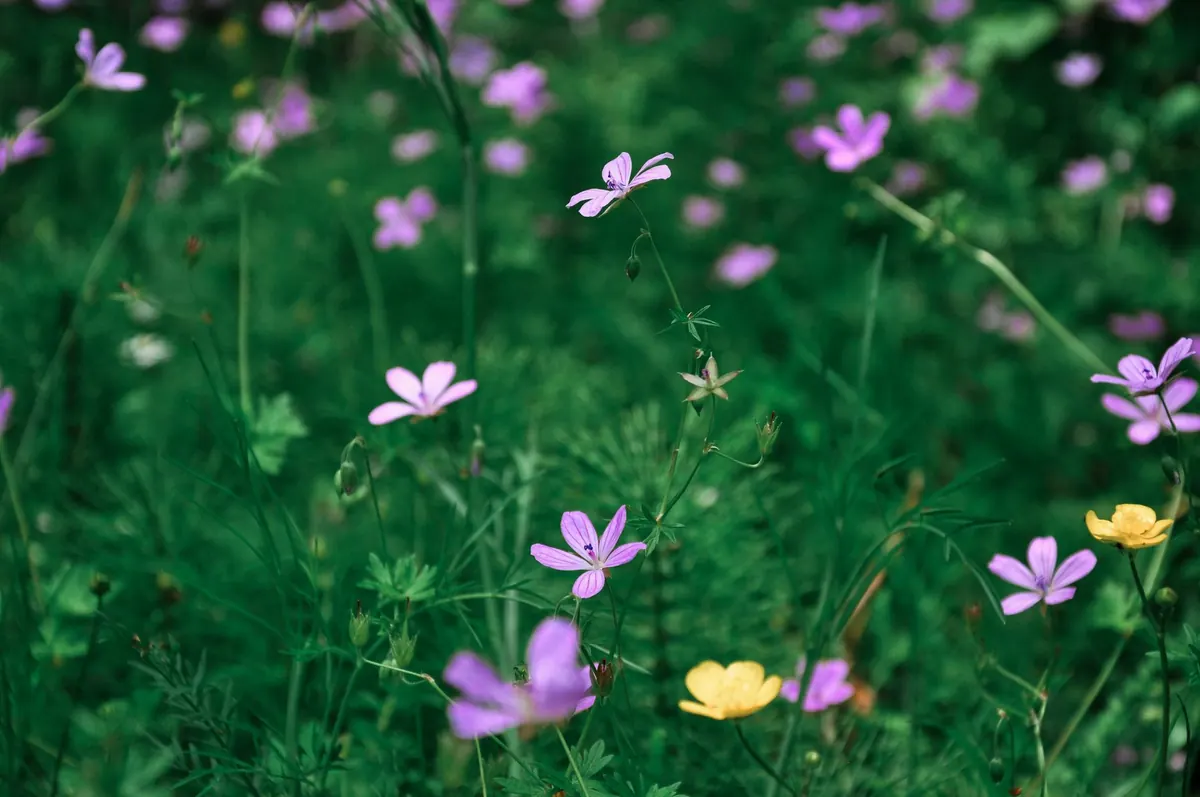
- Meadow cranesbill — a reliable nectar stop in early summer.
- Meadowsweet — for damp ground, and a favourite of hoverflies and small beetles.
- Selfheal — low-growing, long-flowering and easy to overlook.
If grass is swamping everything, sow yellow rattle. It is a native annual that parasitises grasses, thinning them enough for flowers to establish. Sow it fresh in autumn and be patient; it takes a season or two to take hold.
High summer: keep the nectar coming
By mid-July the ox-eye daisies are going over, and a meadow can suddenly look tired. Plan for it. Wild marjoram is the single best plant to add here — butterflies crowd onto it, along with bees and hoverflies. Field scabious, greater knapweed and betony all flower through to September, and all are generous with nectar.
On lighter soils, viper's bugloss is unbeatable for bees, with wild carrot and yarrow adding flat, open landing pads for smaller insects. On damper ground, hemp agrimony and purple loosestrife will pull in red admirals and peacocks. Thistles, often pulled out as weeds, are superb: bees through summer, then goldfinches on the seed in autumn.
Autumn: the last refuelling stop
Devil's-bit scabious is the standout here, flowering into October and feeding late bumblebees and marsh fritillary in the west. Common knapweed and field scabious carry on, and a light cut in midsummer can prompt a second flush of red clover and bird's-foot trefoil.
Then there is ivy. It is not a meadow plant, but a mature ivy allowed to flower on a hedge or wall is one of the most valuable autumn nectar sources in the country, feeding late bees, red admirals and comma butterflies. Resist trimming it until it has finished flowering in November.
Managing the meadow so it keeps working
- Sow or plant in autumn. Native seed needs the cold and damp of winter to germinate well.
- Include yellow rattle to keep competitive grasses in check.
- Cut in late summer, once flowers have set seed — usually late July to early September.
- Always remove the cuttings. Leaving them smothers next year's growth and feeds the grass you are trying to hold back.
- Never cut the whole meadow at once. Leave a third uncut each year on rotation, and leave tussocky edges standing over winter for caterpillars and overwintering insects.
- Keep a nettle patch out of the way. Peacock, small tortoiseshell and red admiral caterpillars depend on it.
- Skip pesticides entirely, and leave a few bare, sunny spots for butterflies to bask.
A meadow managed like this usually improves year on year, with more flowers, more insects and more birds picking over the seed heads.
Start small, and let the flowers set seed
You do not need an acre. A sunny strip two metres wide and five metres long, sown with a native mix and cut once in late summer, will noticeably increase the bee traffic in your garden within a season or two. If you already have rough grass, the cheapest route is to add plug plants of knapweed, field scabious and ox-eye daisy in autumn, then introduce yellow rattle the following year.
The most important habit is restraint. Let flowers run to seed before you cut, leave some stems standing through winter, and accept a little untidiness. A meadow in November is not a mess — it is next summer's nectar, waiting.
Photo: PatoSan / Pixabay