How to Sow a Wildflower Meadow in Autumn: A Step-by-Step Guide
Wildflower seed does not need coaxing so much as timing. In a natural meadow, plants shed their seed in late summer and let the weather do the rest: cooling soil, steady rain, a slow slide into winter, then a spring surge. Sow in autumn and you work with that rhythm instead of against it. Sow in spring and you are asking tiny seedlings to survive heat and drought before their roots are deep enough to cope.
Here is how to do it well, from choosing the patch to the first cut.
Why autumn is the best sowing window
Across most of the UK, the window runs from early September to late October. In mild southern and coastal areas you can often stretch into November, but stop if the ground is waterlogged, frozen, or likely to sit under water for weeks.
The advantages are practical as well as biological:
- Soil is still warm from summer, so seed germinates quickly while moisture is returning.
- Many native species need a spell of cold before they will germinate — yellow rattle, cowslip, knapweed and meadow buttercup among them. A winter outdoors does that job for free.
- Roots establish before the spring flush of weeds, giving perennials a head start.
- You will rarely need to water; autumn rain usually does it for you.
Spring sowing is not impossible, but it is a gamble. On light, irrigated soil in a warm garden you may get away with it. On heavy clay, exposed sites, or a patch you cannot water every day, autumn is far kinder. The colder the winter, the more valuable that natural stratification becomes. In a good autumn, you can almost hear the seed settling in.
Choose the patch, and be honest about the soil
Most meadow plants want three things: sun for at least six hours a day in summer, ground that drains, and soil that is poor. Fertility is where people go wrong. If your patch is an old vegetable bed, a lawn that has been fed for years, or anywhere that has had manure or compost dug in, grasses will romp away and smother the flowers.
If the soil is rich, strip the top few centimetres of turf and soil and take it away. It feels brutal, but nothing else works as well. Alternatively, spend a season growing a hungry crop — potatoes, or a green manure such as grazing rye — and cart everything you cut off site to draw fertility down. Do not add compost, fertiliser or soil improver before sowing. Meadow soil is meant to be lean.
Size matters less than honesty. A sunny 3 x 2 m strip of native flowers will feed more bees and butterflies than a scruffy half-acre in shade. A small bed beside a path, a south-facing bank, or a strip along a hedge can all work beautifully. Avoid sites under trees, against a north-facing wall, or in a hollow where water sits. If the only spot you have is shaded, consider woodland edge plants instead of meadow species; they will be far happier.
Preparing the seedbed
Clear every trace of existing vegetation before you think about seed. Grass, couch, bindweed and dock will out-compete seedlings every time.
Clear the ground
Three approaches work. Lifting turf with a spade is quick and removes a lot of fertility with it. Smothering with black polythene for a full growing season kills most perennial weeds without digging. Repeated shallow cultivation — hoeing every fortnight through summer and raking off the debris — exhausts the weeds but leaves their roots in the soil, so it suits smaller areas. Whichever you choose, hand-dig out the roots of docks, thistles and bindweed afterwards. Leave a fragment of couch root behind and you will meet it again in spring, usually just as the seedlings are starting to look promising.
Once the ground is clear, let it settle. Rake it level, remove stones and roots, and firm it by treading or rolling. You want a fine, crumbly surface that is firm enough to hold moisture, not a fluffy seedbed that dries out at the first breeze. If you can, prepare the site a few weeks before sowing and hoe off any weed seedlings that appear. This stale seedbed technique saves hours of hand-weeding later.
Deal with weeds before they become a problem
Perennial weeds are the biggest threat to a new meadow. If your site is full of nettles, docks, thistles or bindweed, do not sow in autumn and hope for the best. Either smother the area for a full year, or lift the turf and dig out every visible root. Annual weeds are less serious. They can be hoed off before sowing, and a dense sowing of meadow plants will eventually shade them out. But if you start with a clean, firm, weed-free seedbed, your meadow will establish faster and need less rescue work.
Choose the right seed mix
Not all wildflower seed is equal. Look for native British species, preferably of local provenance, and match the mix to your soil and site. A traditional hay meadow mix for loamy or clay soil will include grasses such as crested dogstail, sheep's fescue and smooth-stalked meadow grass, plus flowers such as ox-eye daisy, common knapweed, cowslip, meadow buttercup, yarrow, selfheal and birds-foot trefoil.
Yellow rattle is the meadow-maker. It is a semi-parasitic annual that weakens grasses, opening gaps for wildflowers. If your soil is even slightly fertile, include it. On very rich ground, you may need to sow yellow rattle again in the second year to get it established.
Cornfield annuals — cornflower, corncockle, poppy, corn marigold — are useful for first-year colour. They will not persist in a perennial meadow, but they fill the gap while slower plants settle. Avoid generic mixes that include non-native or ornamental species. They may look pretty, but they do not support the same range of insects, and some can become invasive.
Check the sowing rate on the packet. A grass-and-wildflower mix is usually sown at about 4–5 g per square metre. Pure wildflower seed is often sown at 1–2 g per square metre. More seed is not better; overcrowded seedlings compete with each other and produce weak plants.
Sowing the seed
Choose a still, dry day. Mix the seed with dry sand, fine soil or sawdust to bulk it out. This makes it easier to see where you have sown and helps you spread it evenly. Divide the area into two halves. Sow half the mix walking in one direction, then sow the other half walking at right angles. This cross-sowing method avoids bare patches and thick clumps.
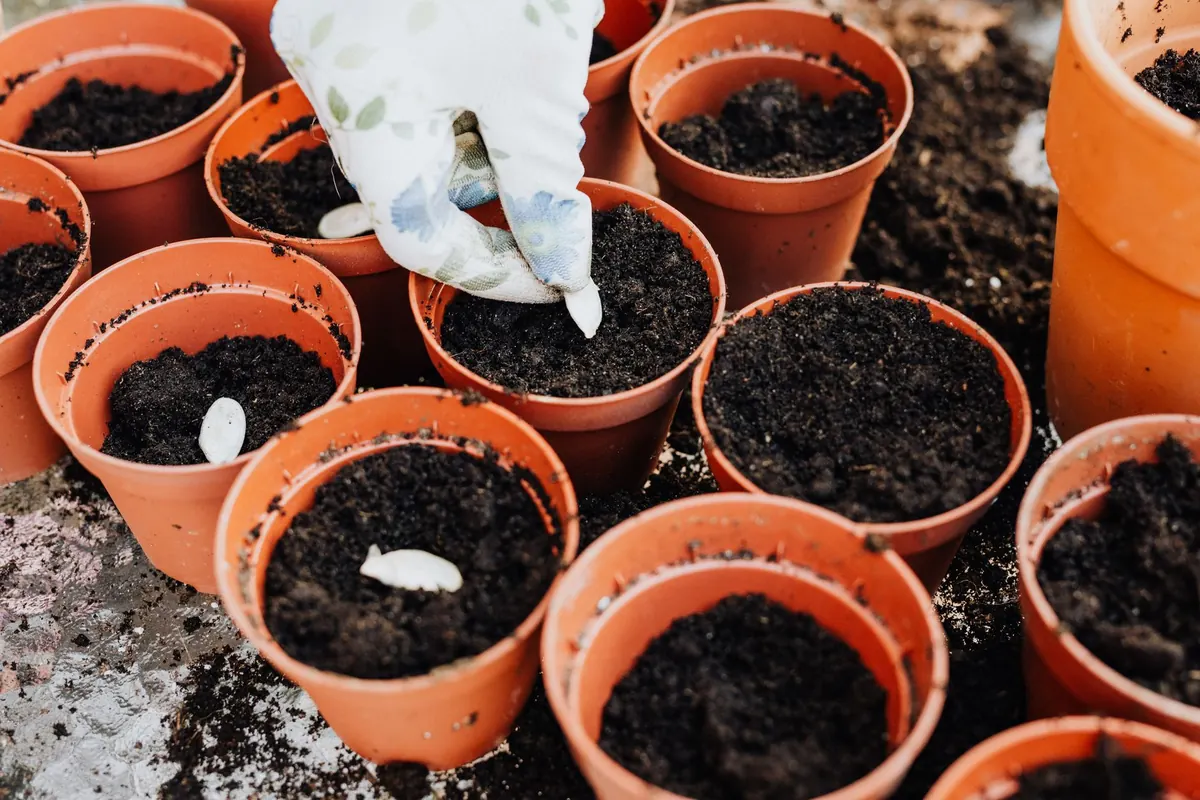
Broadcast the seed by hand, keeping your arm low and your wrist loose. Do not worry about covering every square inch perfectly. Once sown, rake the surface very lightly with a spring-tined rake, just enough to brush the seed into contact with the soil. Then firm the ground by treading it in small steps or rolling it. The seed should sit no more than 1–2 mm deep. Some species need light to germinate, so burying them deeply is a common mistake.
If birds are a problem, a light covering of fleece or netting for a week or two can help, but remove it once seedlings appear. In most autumn sowings, rain will do the watering. Only water if the weather turns unseasonably dry and warm for more than a fortnight.
After sowing: winter, spring and the first cut
Do not expect a full meadow in the first year. Autumn sowing is about roots, not flowers. The plants are building the underground architecture that will carry them through summer droughts and repeated mowing. In winter, do as little as possible. Keep off the ground when it is waterlogged, and do not mulch or feed.
In spring, walk the patch and hand-pull any aggressive weeds — dock, thistle, nettle, bindweed — before they set seed. You may also see annual weeds. If they threaten to smother the seedlings, cut them back with shears or a mower set high, and remove the cuttings. Do not mow too short, and do not mow in the first spring unless you have to.
The first proper cut usually comes in late summer, once the flowers have set seed. Leave the cuttings on the ground for a few days so that seed can drop, then rake them off and compost them. Removing cuttings is essential. If you leave them, they feed the soil, and fertility is the enemy of meadow flowers. In following years, cut in late July or August, then again in autumn if growth is strong. A meadow is made by repeated cutting and removal, not by leaving everything wild.
Watering, feeding and what not to do
Once established, a wildflower meadow should not need watering.